UNH Lecturers United- AAUP proudly support our Transgender students, faculty, and staff at UNH with whom we are lucky to work. We appreciate, value, and celebrate the great diversity of gender identities and gender expressions that exist among our community members. We believe that we are collectively stronger in our educational mission and common humanity when our differences are recognized, respected, and honored. It is our responsibility to support each other through difficult times. Know that UNHLU is here for every member of the UNH community.
Federal Proposal to Redefine Gender Throws College Policies Into Uncertainty
Federal Proposal to Redefine Gender Throws College Policies Into Uncertainty
Open Letter to COLA Dean Regarding Anticipated Lecturer Non-Renewals
January 25, 2018
Dear Dean Bostic,
The recently announced cuts of Lecturer faculty were dramatic and unanticipated. Many of us across the University have questions about this decision, and we write to you now to ask you to provide more information to the community about these cuts.
In particular, we request the Deans’ office address:
· The College financial situation. We call on you to provide specific details about the COLA finances. Detailed financial reports for the college would allow for the transparency needed to understand the context of recent cuts to the teaching faculty.
Sincerely,
UNHLU-AAUP Executive Committee
Dear Dean Bostic,
The recently announced cuts of Lecturer faculty were dramatic and unanticipated. Many of us across the University have questions about this decision, and we write to you now to ask you to provide more information to the community about these cuts.
In particular, we request the Deans’ office address:
· The College financial situation. We call on you to provide specific details about the COLA finances. Detailed financial reports for the college would allow for the transparency needed to understand the context of recent cuts to the teaching faculty.
- An articulated plan for how the more than 100 sections of courses taught by the non-renewed faculty members will be covered. We request you address the following questions: Will COLA be reducing the number of classes? Will upper-level classes be eliminated? Will faculty teaching those upper-level classes be moved into lower-level courses? Is the intention to renegotiate faculty workloads or to hire more faculty? Cuts to teaching faculty compromise programs, as well as students’ experiences and opportunities; therefore, your plan here is a matter of concern for all community stakeholders.
- The otherwise unannounced and unexplained new requirement for Lecturer Faculty to possess the terminal degree of a PhD. Your January 19 email stated that the affected faculty “were not renewed as the result of a desire to enhance program strength by ensuring that faculty members have the highest terminal degree in their field.” We request explanation for why this criterion is cited now, when it has never been a factor of the hiring, review or renewal of these faculty. As you are aware, many of these faculty members were repeatedly reappointed on the basis of their teaching experience and performance in the classroom. In addition, these lecturers have been reviewed by your office as meeting or exceeding your expectations annually. Further, seven of the affected faculty had been promoted to the ranks of Senior or Principal Lecturer, and their degrees did not play a role in these promotion decisions. How does your own recent assessment and promotion of these teachers connect with the notion that they are suddenly unqualified? We request explanation for the logic and soundness of this new criterion.
Sincerely,
UNHLU-AAUP Executive Committee
LECTURER UPDATE
January 18, 2018
As we begin the new semester, we have learned that at least 17 of our Lecturer Faculty colleagues have not been renewed for next academic year. This cut eliminates over 160 years of teaching experience at UNH. Critical elements of programs, affecting hundreds of students, will be significantly impacted, reduced, or eliminated. While these faculty cuts are concentrated in the College of Liberals Arts, the ripple effects on students, departments, and faculty will be felt across the campus.
At a time when we need to address the grand challenges associated with creating engaged, global citizens, we cannot afford to limit the academic experiences of our students. Now more than ever, our students deserve to be mentored by talented, experienced, teaching-focused faculty. To be prepared for careers in business, government service, public safety, health care, and beyond, our students need to have developed their fluency in languages, cultural, societal, and political awareness.
We are not yet even clear about the full extent of the cuts. At the time of this message, the Provost’s office has been unable to provide to the UNHLU-AAUP definitive details of the non-renewal actions. The precarious nature of non-tenure track, teaching-focused appointments at UNH has always been apparent to us, but never more so than now. The faculty who have been affected have demonstrated deep, long term commitments to the students of UNH. Several of these folks have been at UNH for decades.
Please be on the lookout for details of our upcoming membership meeting in early February. We will also be keeping you up to date as we learn more information. Now, more than ever, is the time for all of us to stand together in solidarity with our colleagues who have just received this shocking news, and to prepare for what is coming. Remember, we are stronger together.
At a time when we need to address the grand challenges associated with creating engaged, global citizens, we cannot afford to limit the academic experiences of our students. Now more than ever, our students deserve to be mentored by talented, experienced, teaching-focused faculty. To be prepared for careers in business, government service, public safety, health care, and beyond, our students need to have developed their fluency in languages, cultural, societal, and political awareness.
We are not yet even clear about the full extent of the cuts. At the time of this message, the Provost’s office has been unable to provide to the UNHLU-AAUP definitive details of the non-renewal actions. The precarious nature of non-tenure track, teaching-focused appointments at UNH has always been apparent to us, but never more so than now. The faculty who have been affected have demonstrated deep, long term commitments to the students of UNH. Several of these folks have been at UNH for decades.
Please be on the lookout for details of our upcoming membership meeting in early February. We will also be keeping you up to date as we learn more information. Now, more than ever, is the time for all of us to stand together in solidarity with our colleagues who have just received this shocking news, and to prepare for what is coming. Remember, we are stronger together.
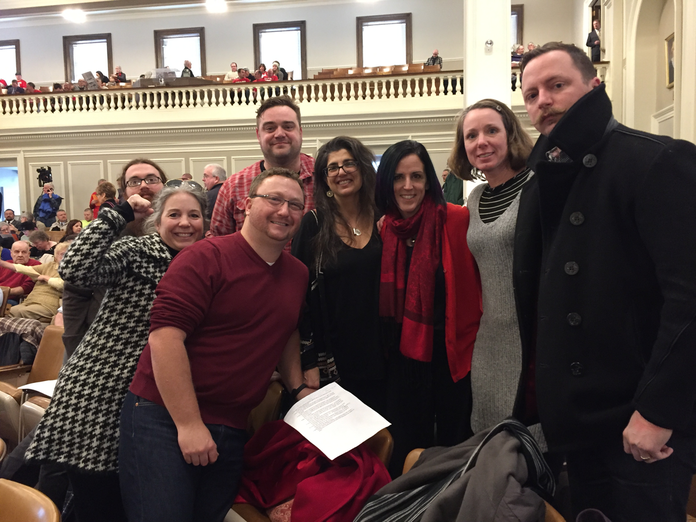
Right to work fails in
NH House, 200-177
WHY RIGHT TO WORK
IS WRONG
Right-To-Work harms NH workers
Letter to the Editor:
True Representation
by LU President Sarah Hirsch
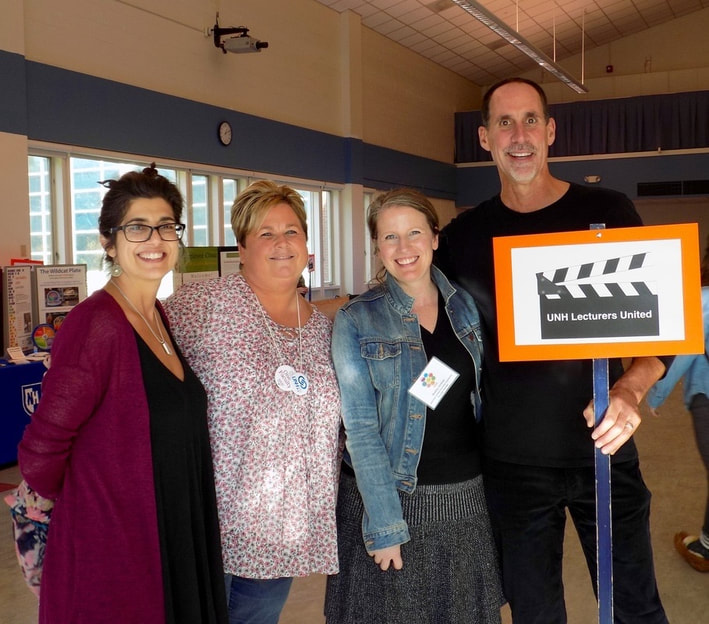
Nena Stracuzzi, Monique Couillard (UNHPA), Shelley Girdner,
and Peter Welch participate in the 2016 UNH Benefits Fair.
